
Oreobundance
Over 500 billion cookies have been sold worldwide across more than 100 countries.

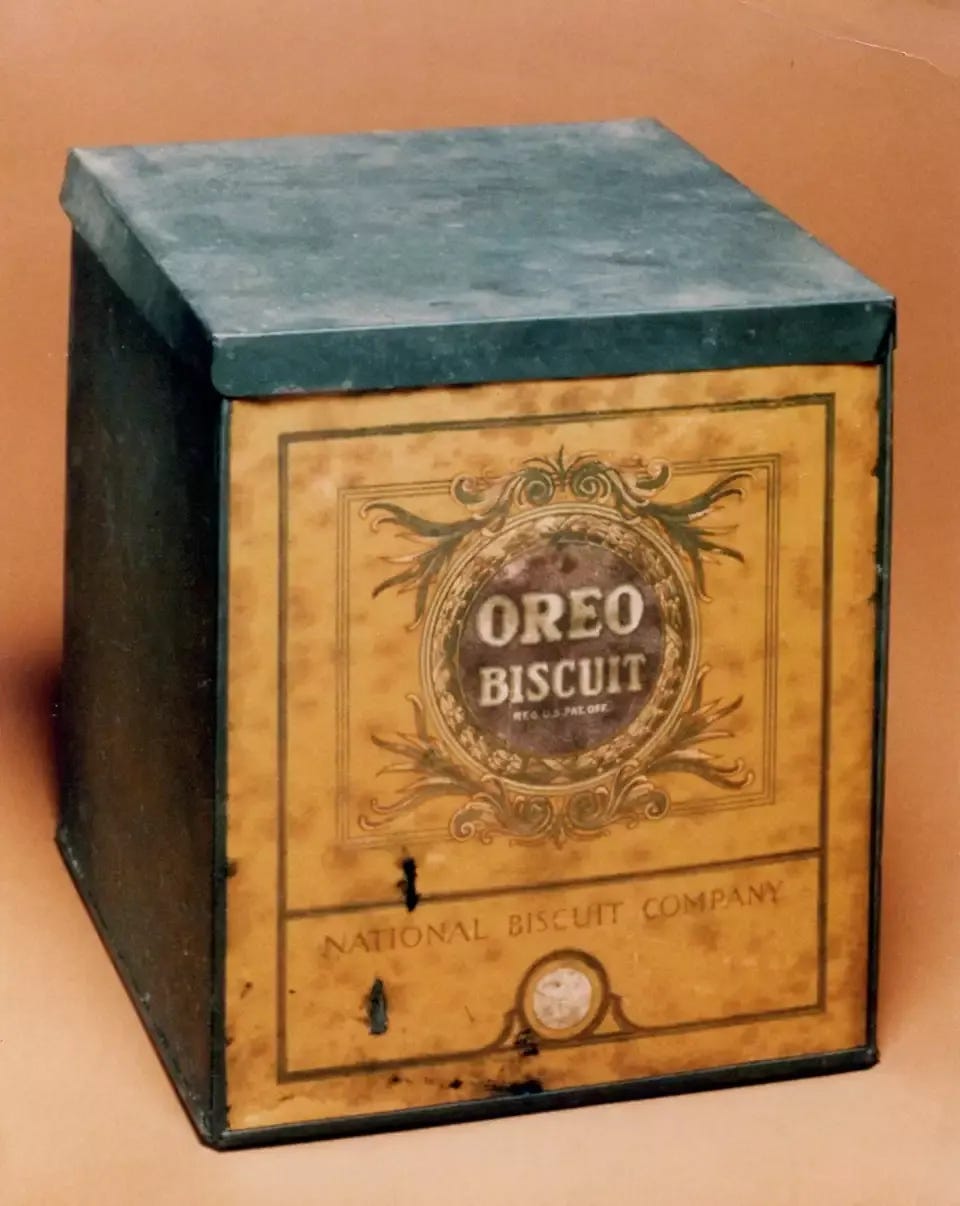
America's favorite cookie began on March 6, 1912, when the National Biscuit Company (Nabisco) introduced Oreo cookies in New Jersey. Since their introduction in 1912, more than 500 billion have been sold in over 100 countries. Today, bakeries produce more than 60 billion Oreos each year, enough for every person on the planet to enjoy 7.2 cookies annually. Americans are especially fond of Oreos, consuming an average of 58 cookies per person each year.
In 1912, Oreos were sold in bulk to retailers for $1.85 per 9.25-pound case, or about 20 cents a pound. Retailers typically sold them to customers for around 25 cents a pound. There are around 40 cookies in a pound. Entry-level workers at the time were earning about 10 cents an hour, putting the time price at 2.5 hours per pound, or 3.75 minutes of work for a single Oreo in 1912.
Today you can buy an 18.12 ounce package at Walmart for $4.97, or $4.38 per pound, or 11 cents per cookie. Limited-service restaurant workers are earning around $19.16 an hour, putting the time price per pound at 13.7 minutes, or 21 seconds per cookie.
You get 10.9 Oreos today for the time price of one in 1912.
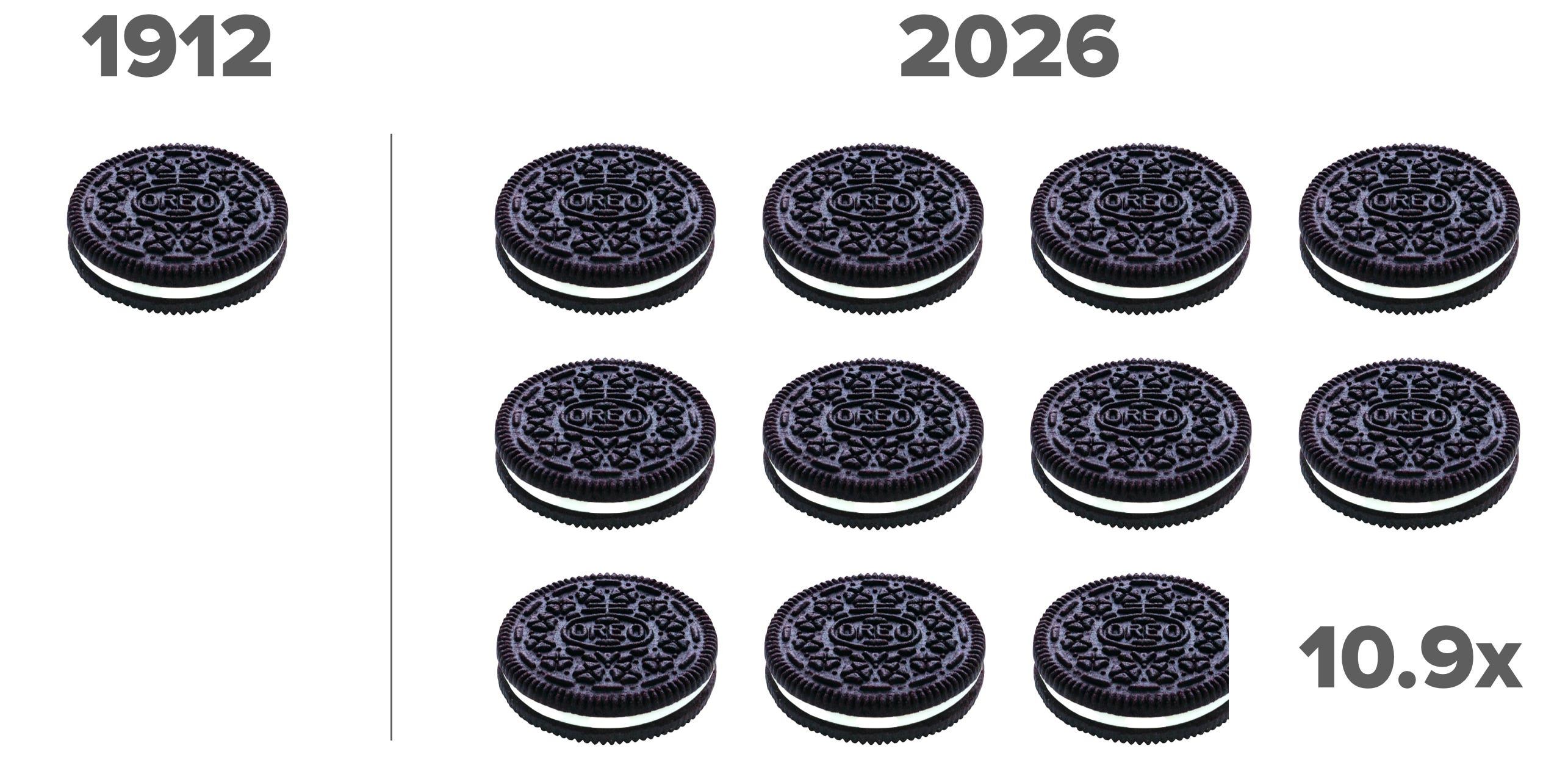
If there had been no innovation since 1912, a family-size package of 45 Oreos would cost $59.34 instead of $4.97.
The story of the Oreo is not really about cookies, but about human ingenuity. Over the past century, farmers, millers, food scientists, engineers, manufacturers, truck drivers, retailers, and countless other innovators have discovered better ways to grow ingredients, produce food, transport products, and serve customers. As knowledge accumulated, Oreos became dramatically more affordable. What once required hours of work can now be earned in just minutes. The Oreo reminds us that the ultimate resource is not wheat, sugar, or cocoa, but the human mind.
Hydrox was the original creme-filled cookie. Nabisco stole the idea and had enough clout to win in the marketplace.