

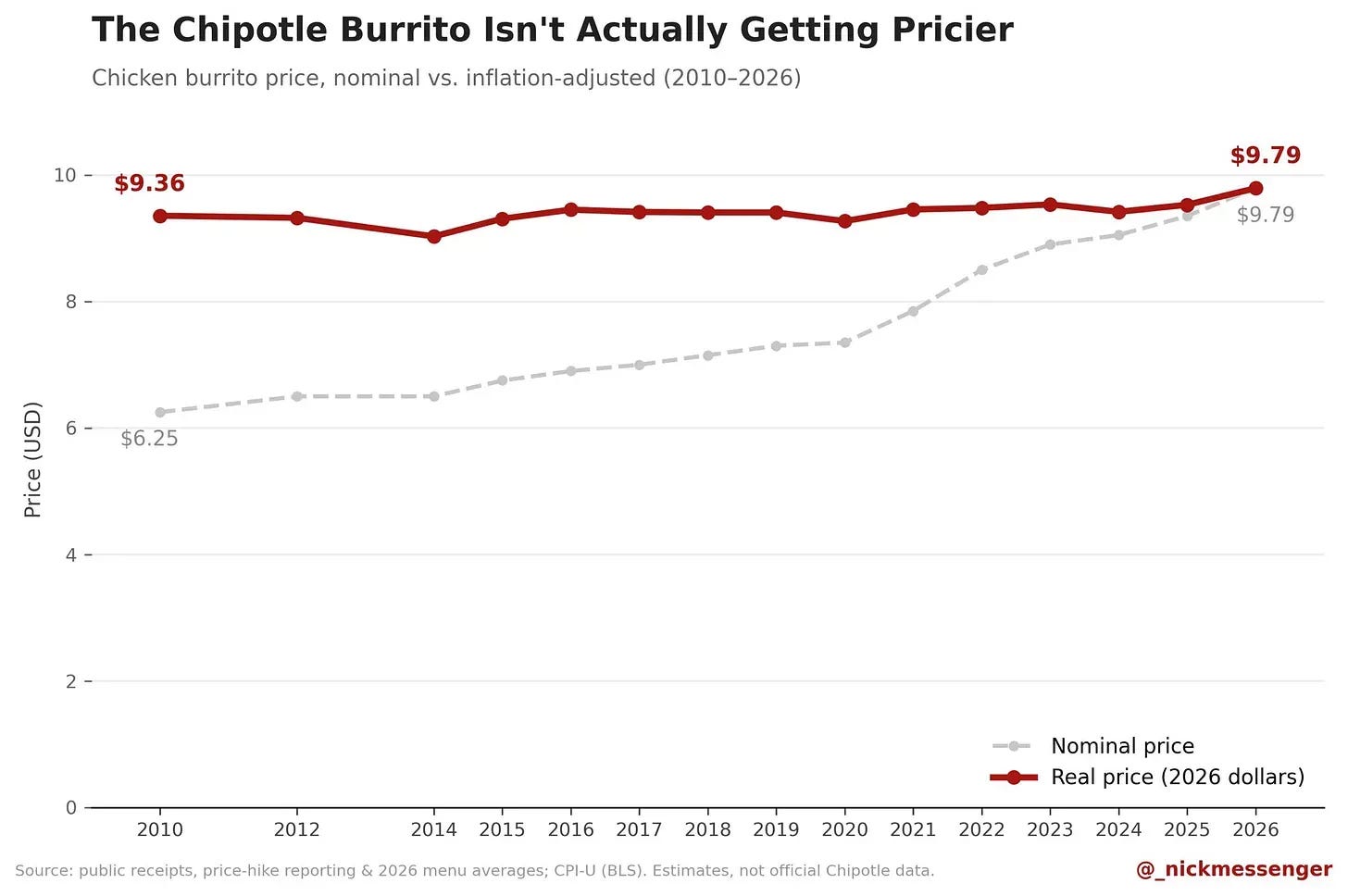
Chipotle burritos have been getting a lot of attention lately. Professor Nick Messenger recently compared their nominal and inflation-adjusted prices from 2010 to 2026. The nominal price rose 57 percent, from $6.25 to $9.79. But after adjusting for inflation, Messenger found that the “real” price increased by just 4.6 percent, from $9.36 to $9.79.
But what about the time price?
The Bureau of Labor Statistics (BLS) tracks hourly earnings across a variety of industries, including limited-service restaurant workers. In June 2010, those workers earned $10.16 an hour, putting the time price of a $6.25 Chipotle burrito at about 37 minutes.
Today, hourly earnings have risen to $19.20, putting the time price of a $9.79 burrito at just over 30 minutes. Your burrito costs about seven minutes less than it did in 2010. The time price has fallen by 17.3 percent. Put another way, you now get about 21 percent more burrito for your time.
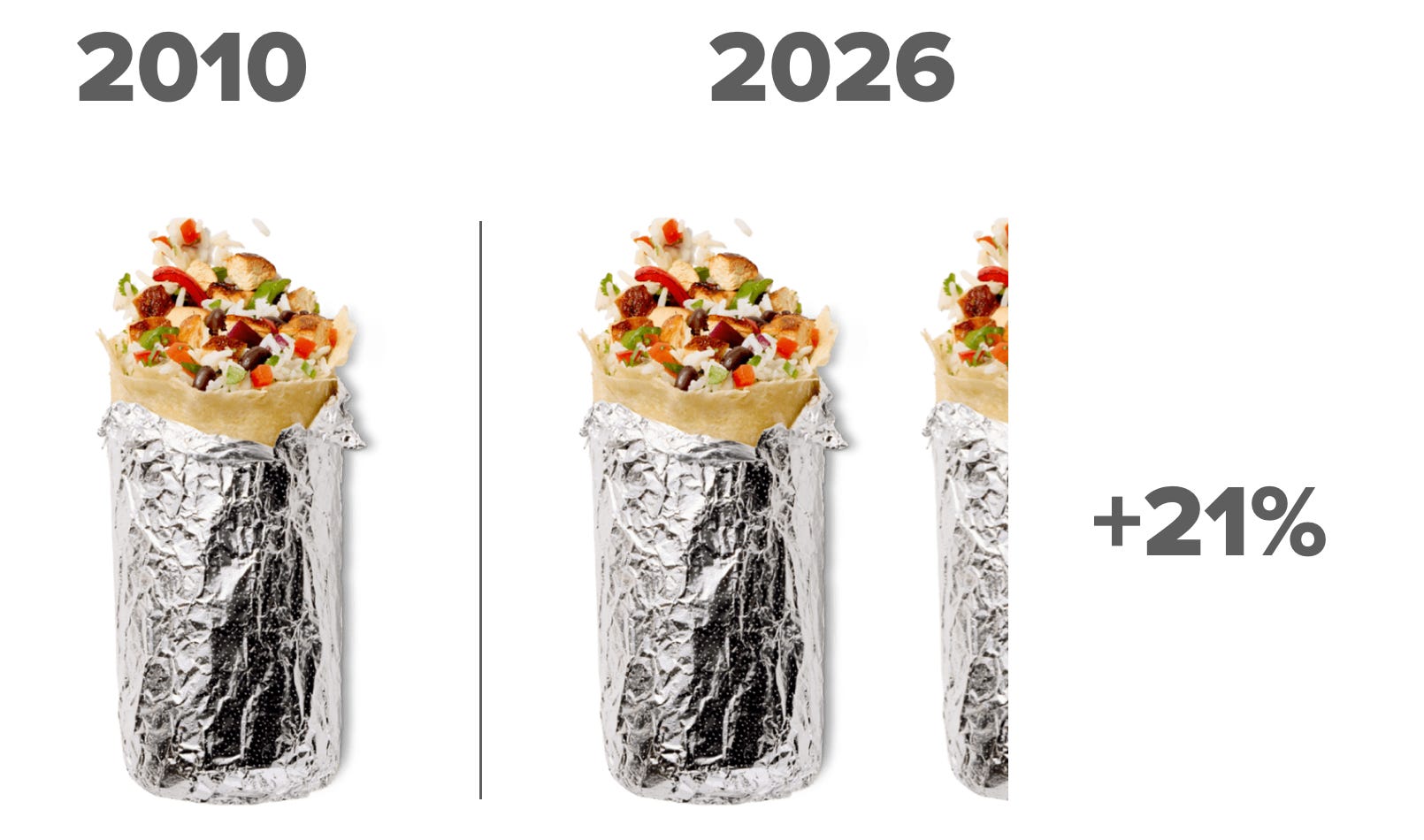
While the Federal Reserve Bank (FED) has been printing lots of currency since 2010, increasing the money supply by 168 percent, Chipotle has been delivering more value for their customers by reducing the time price of its burrito. Money may be less valuable, but your time buys more burrito.
This is the deeper story of economic progress. Dollars are symbols, and inflation can distort the message they send. Time is the true currency of life. Chipotle does not create abundance by printing more dollars; it creates abundance by combining knowledge, capital, technology, and human ingenuity to deliver more value for less of your time. That is how a knowledge economy defeats scarcity—not by multiplying money, but by multiplying what every minute of human life can buy.
The ultimate measure of progress is not how many dollars something costs, but how much of your life you must trade to get it.
GaleWinds has over 375 articles about resource abundance. Click here to see more.