
Toothpaste Abundance
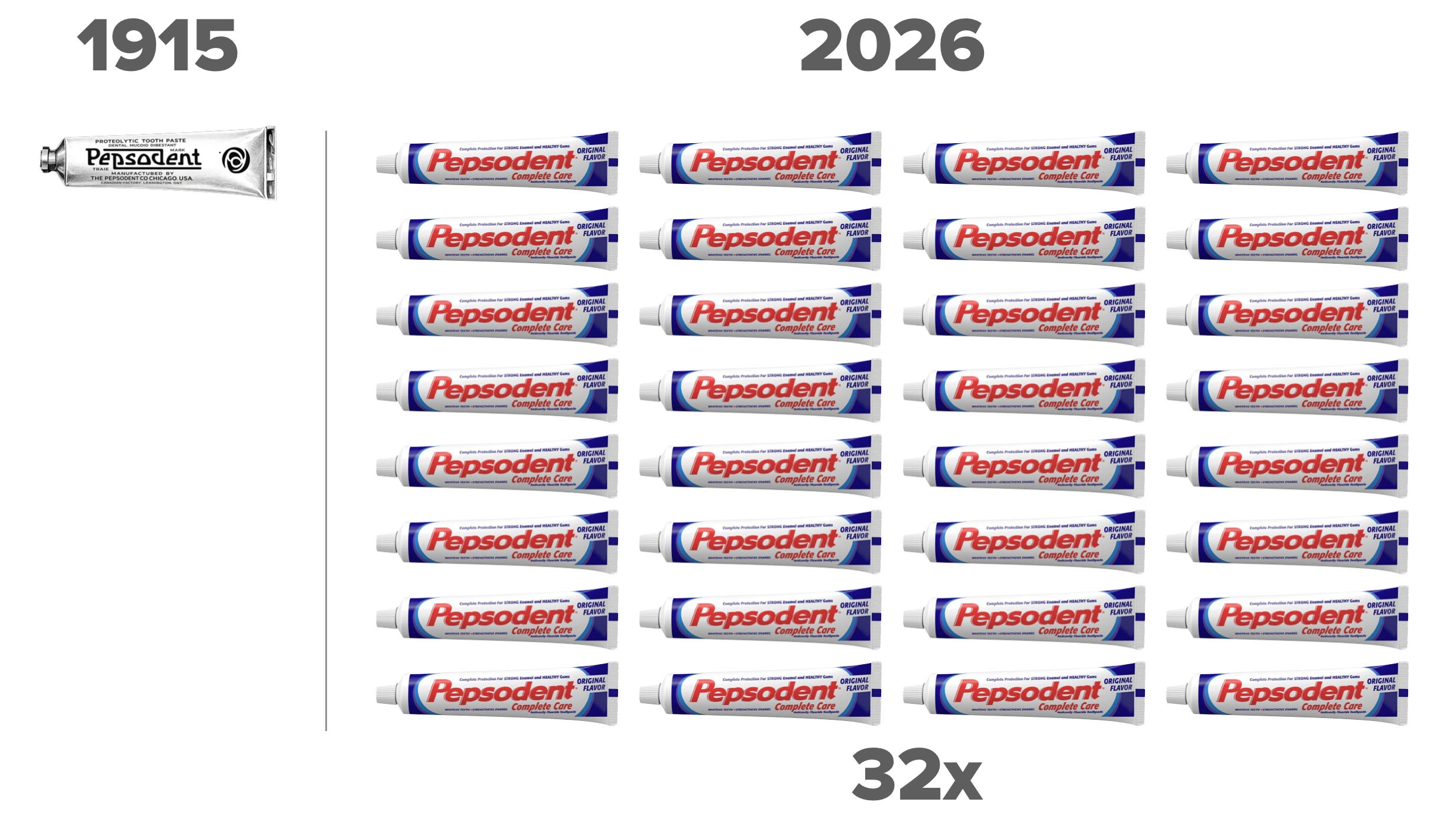
Brush all 32 teeth today for the time price of one in 1915.

Before commercial toothpaste was invented, people used tooth powder—typically chalk, salt, charcoal, or baking soda applied with a rag or finger. Most people simply didn't clean their teeth.
The original Pepsodent formula was patented in 1915 by William M. Ruthrauff. At the time only 7 percent of Americans used toothpaste. A decade after Pepsodent’s nationwide ad campaign, that number had jumped to 65 percent.
You could write to the company in Chicago and they would mail you a one-week tube of toothpaste for free.
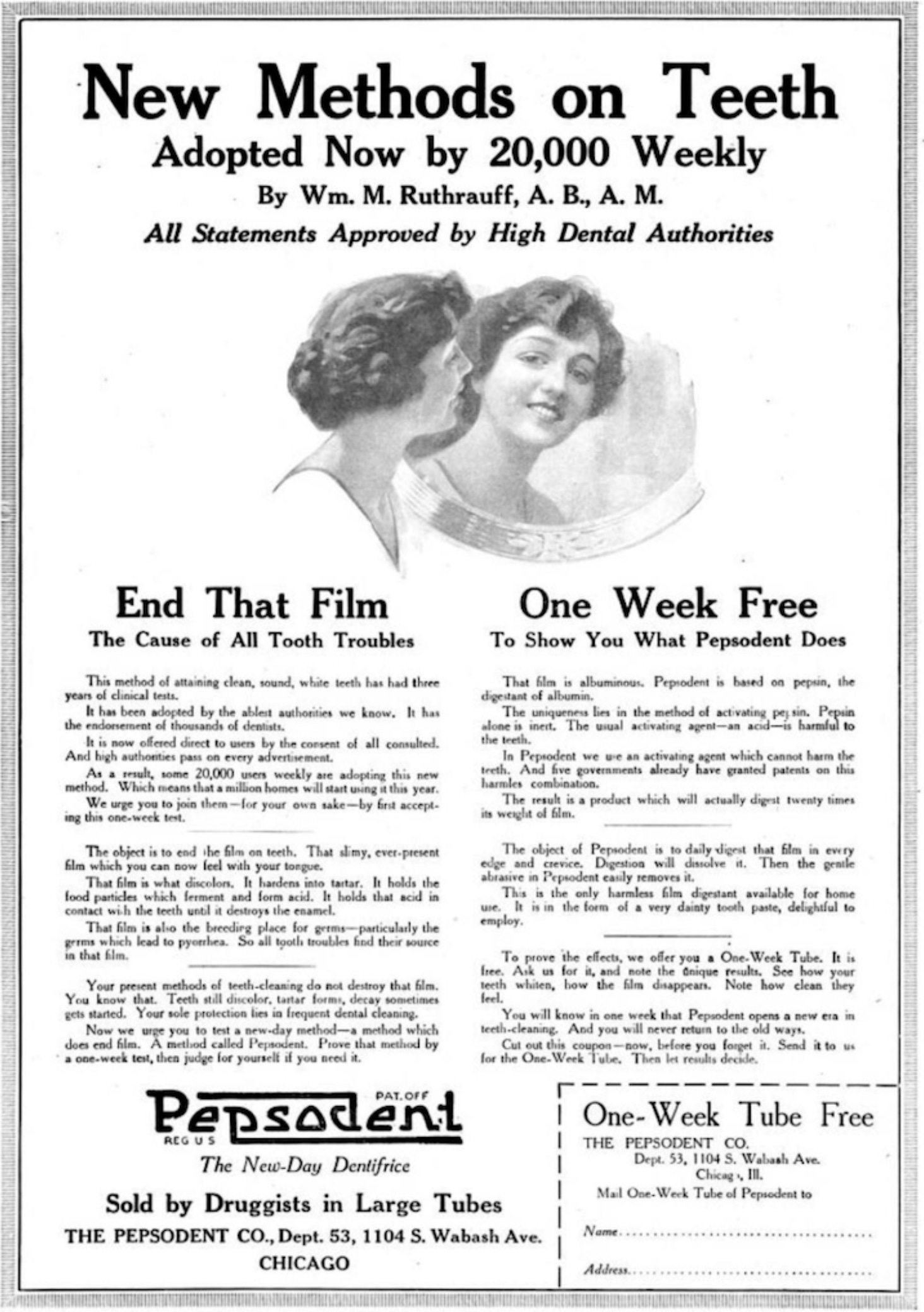
Pepsodent was positioned as a premium-priced product: it was 50 cents per tube, roughly double the going rate for competitors to reflect its “scientific” formula featuring pepsin and other ingredients.
In 1915, entry-level workers earned about 11 cents an hour, putting the time price of a tube at roughly 4.55 hours of work. Today, a 5.5-ounce tube costs about $2.68. With entry-level limited-service restaurant wages around $18.95 per hour, the time price has fallen to just 8.5 minutes. That represents a 96.9 percent decline in the time price. Put differently, for the time it took a worker in 1915 to earn enough to buy one tube, a worker today can buy about 32 tubes.
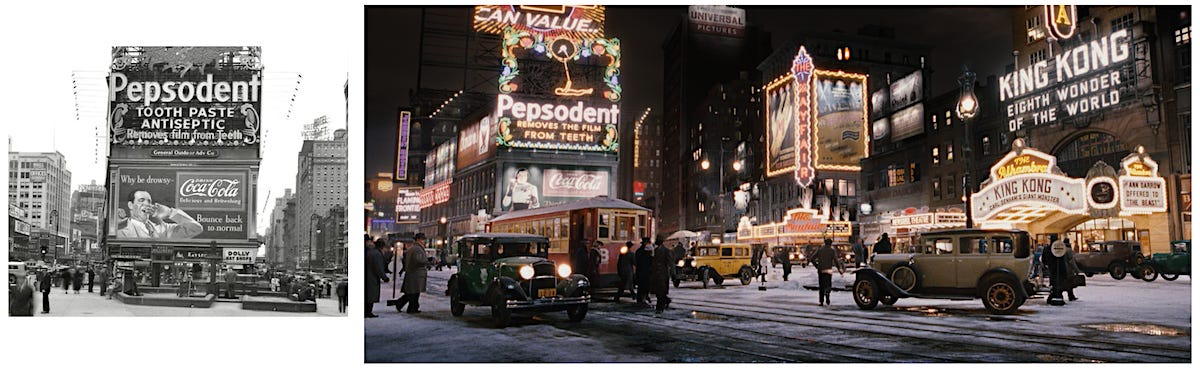
Pepsodent advertised in New York’s Times Square with a major neon sign. The sign showed up in the 2005 re-make of King Kong .
The Pepsodent Show Starring Bob Hope was a highly popular American radio comedy variety program that aired on NBC from1938 to 1948. It was a staple of the “Golden Age of Radio” and was consistently ranked as one of the most-listened-to programs during World War II.

Here’s a fun Pepsodent TV ad from 1957:
Capitalism not only gives us more value for lower prices, it also gives us much greater variety. There are nearly 50 distinct brands of toothpaste marketed internationally today, catering to diverse needs like whitening, sensitivity, and natural ingredients. Entrepreneurs and innovators make us all smile.
Please let me know in the comments if there is a product you would like to see analyzed in a future article.
How about housing?