
Paper Abundance
If we're running out, why is it so cheap?

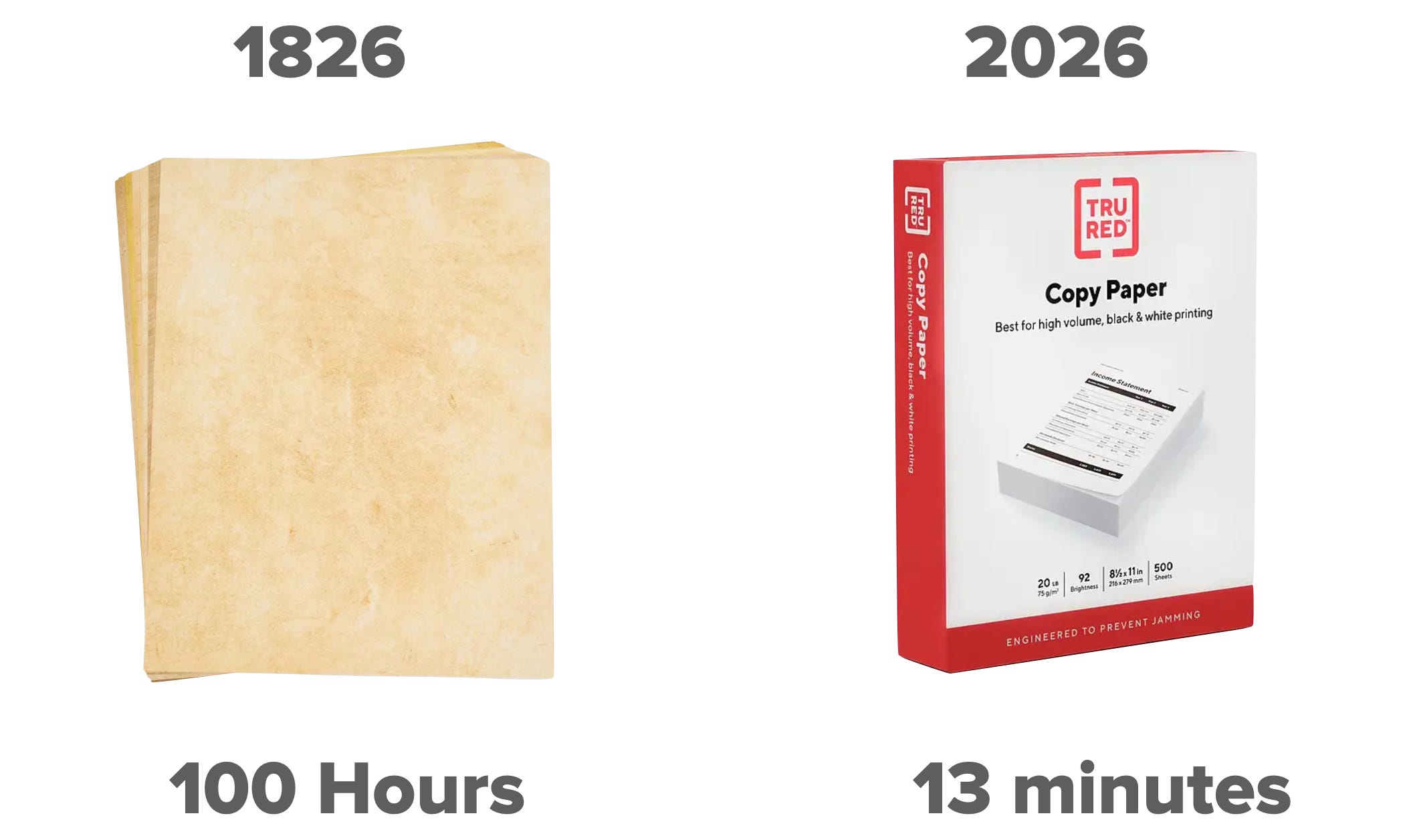
In 1826, a ream of 500 sheets of paper cost about $5.00. With average wages near five cents an hour, the time price was 100 hours. Paper was precious because modern paper-making techniques had yet to be invented—we had yet to discover the knowledge to innovate the product.
Today, a ream of 500 much higher quality sheets sells for $7.99 at Staples. With average wages around $36.86 an hour, the time price is just 13 minutes.
The time price of paper has fallen by 99.78 percent in the last 200 years. For the time required to earn the money for a single sheet in 1826, a worker today can obtain 461 sheets. Scarcity didn’t disappear because we conserved paper—but because we learned how to transform abundant trees into even more abundant paper.
What About Recycled Paper?
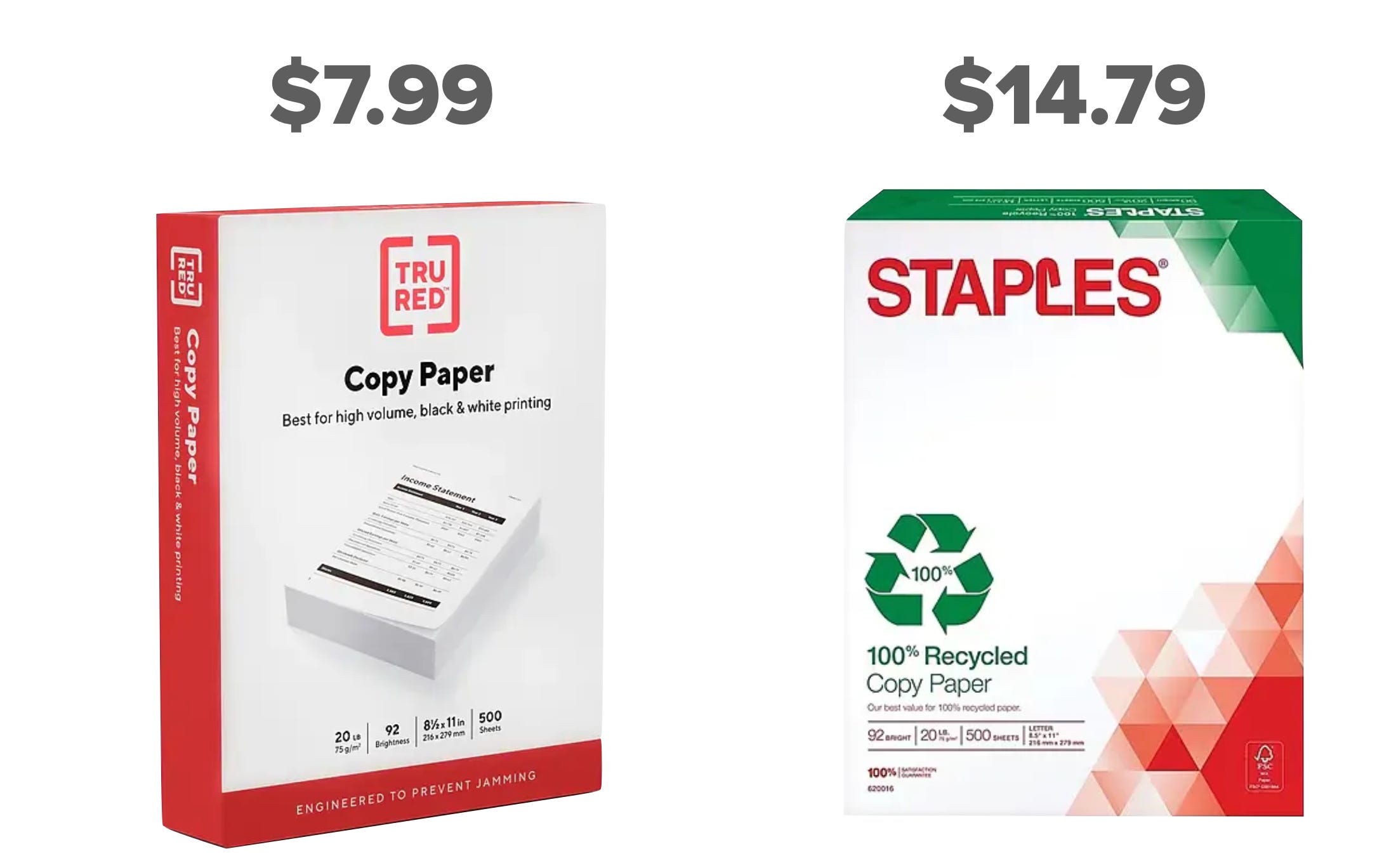
Many people assume that recycling paper saves resources. If that were true, why is recycled paper about 85 percent more expensive than virgin paper? The answer is that the United States has roughly 300 billion trees, while recycling itself consumes substantial energy, labor, and capital.
A useful question whenever someone warns that we’re “running out” of something is simple: If it’s so scarce, why is it so cheap?
Remember, abundance doesn’t come from good intentions; it comes from innovation. Over two thousand years, paper has migrated from papyrus to cotton and linen rags to wood pulp—each transition a triumph of human ingenuity over scarcity. What we consume is not trees or fibers, but knowledge encoded in matter. And the more we consume the more we discover. That is why paper is plentiful, pencils are cheap, and light is abundant. Wealth is learning made visible, and abundance is the dividend of ideas.
If you learned something surprising, share this post with a friend who likes data analysis and history.
If there is a product you would like to see analyzed in a future article, please let me know in the comments.
Next week: Vitamix® abundance
Learn more about our infinitely bountiful planet at superabundance.com. We explain and give hundreds of examples why more people with freedom means much more resource abundances for everyone in our book, Superabundance, available at Amazon.

Gale Pooley is a Senior Fellow at the Discovery Institute, an Adjunct Scholar at the Cato Institute, and a board member at Human Progress.
