
MRI Abundance
Markets and incentives to innovate can cure expensive healthcare.

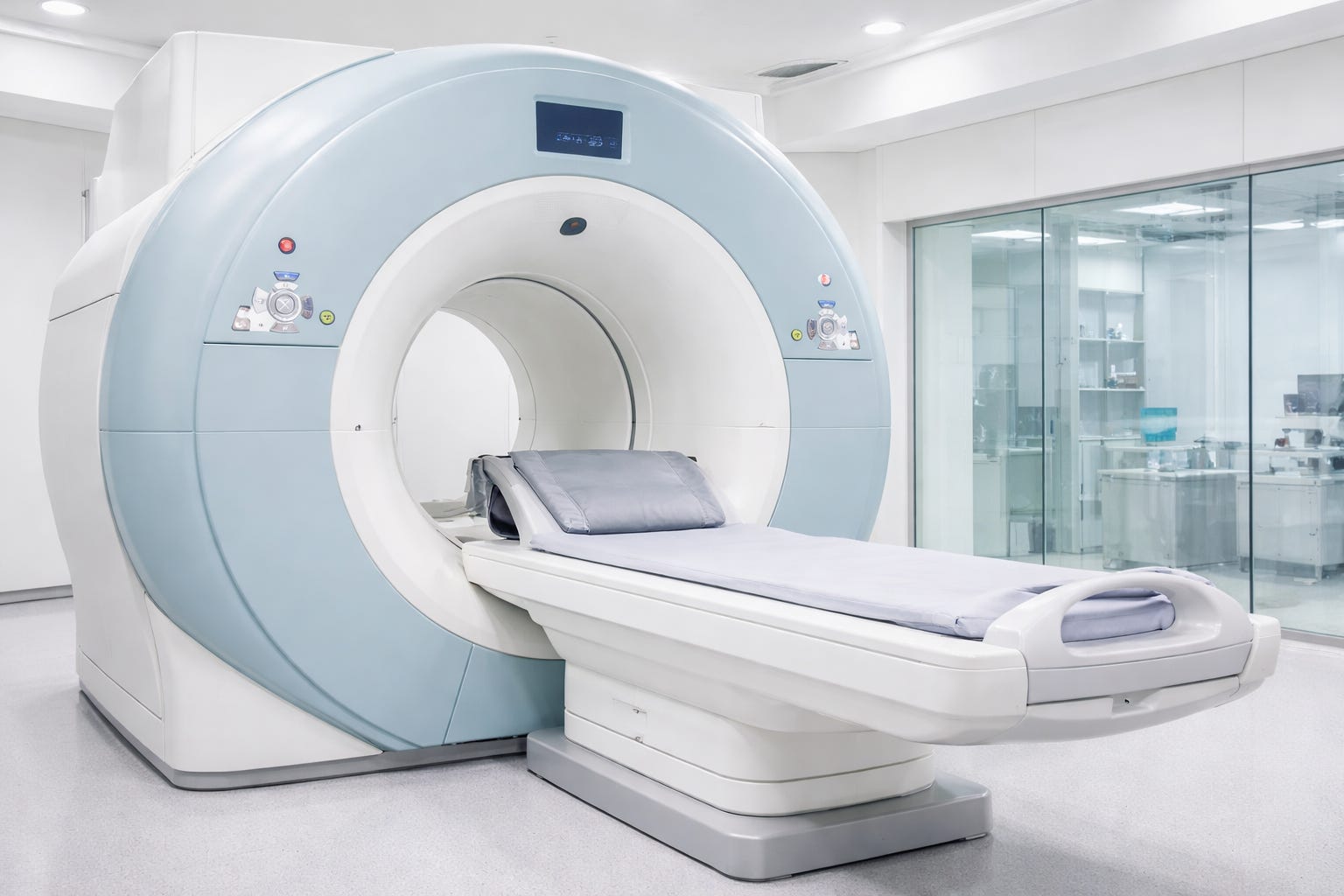
Magnetic resonance imaging (MRI) was approved by the FDA in 1984. That year, only about 145 units were sold, each costing roughly $1.2 million. Journalist Ellie Kincaid wrote about Robert “Bob” Kagan, a 36-year-old pathologist who established the first stand-alone imaging center in Fort Lauderdale, Florida. The technology itself had been envisioned more than a decade earlier. Kincaid notes that MRI had been sketched out as an imaging technique by two physicists, Paul Lauterbur and Peter Mansfield, beginning in 1973, but it took years of engineering and experimentation to transform theory into practical medical technology—a breakthrough that earned them Nobel Prizes in 2003.
Today, nearly 40 million scans are performed annually. Since those early machines, MRI technology has advanced dramatically, delivering higher-resolution images, faster scan times, greater patient comfort, and increasingly sophisticated AI-assisted diagnostics.
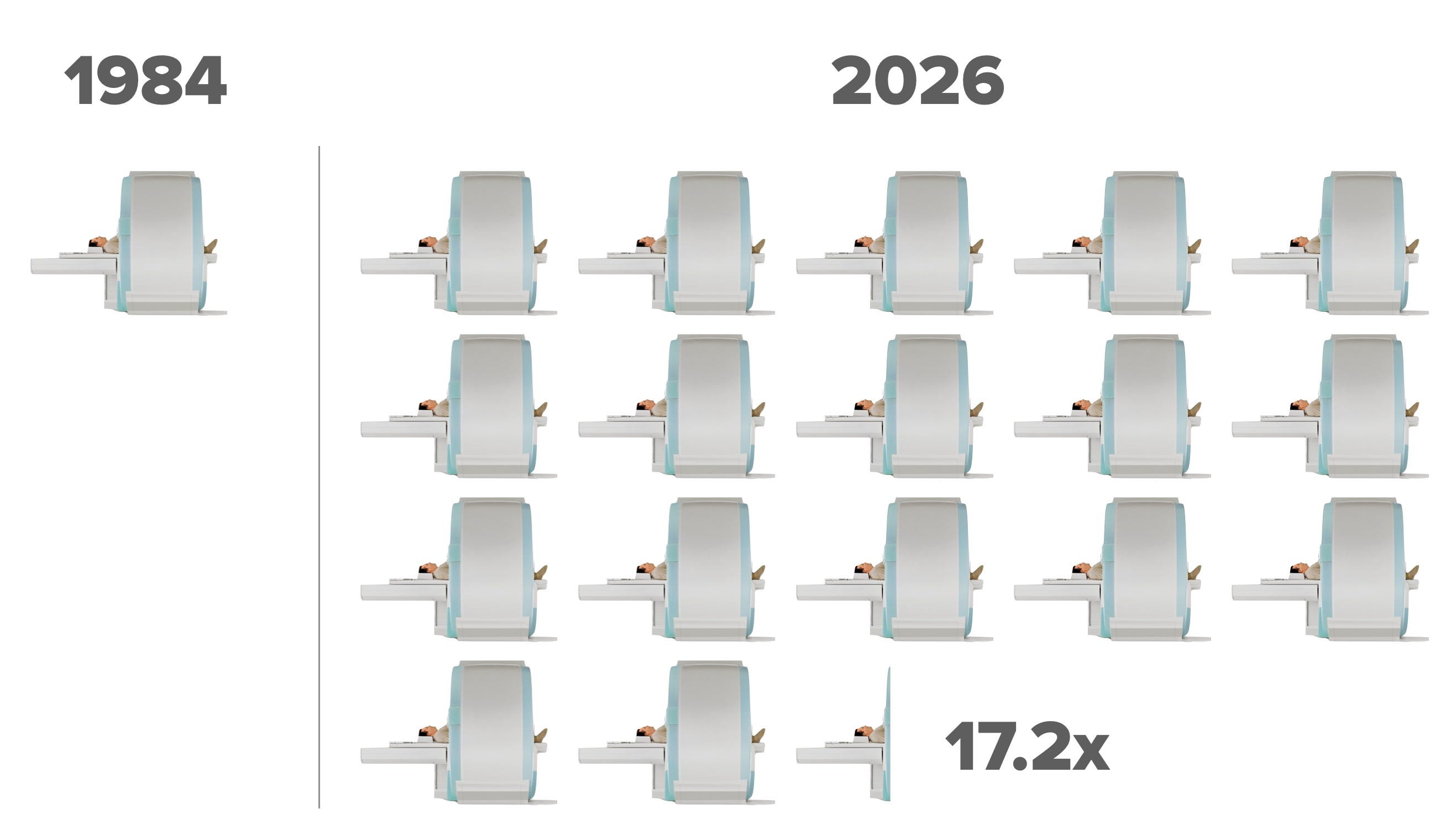
Perhaps the greatest achievement has been the time price. The cost of an MRI scan in 1984 was around $1,800. Blue-collar hourly earnings at the time were around $8.38 an hour, putting the time price at 214.8 hours. Today you can get a scan for as low as $399. With blue-collar hourly earnings now averaging $31.95 an hour, the time price has fallen to just 12.5 hours. That’s a 94.2 percent decrease. For the time it took to earn the money to buy one MRI scan in 1984, you get 17.2 scans today. Not only are MRIs much more affordable, they are faster, higher resolution, more comfortable, and diagnostically far superior.
What explains this increase in quality and decrease in price? In a word: capitalism.
Unlike many medical services, MRI centers often compete directly for patients who pay out of pocket. When providers must attract customers based on price, quality, and convenience, innovation accelerates and costs tend to fall. By contrast, when third parties—governments or insurance companies—pay most of the bill, price competition weakens and costs rarely decline.
According to the Bureau of Labor Statistics, medical care service prices have increased 520 percent since 1984, while blue-collar hourly earnings increased 282 percent over the same period.
The dramatic improvement in MRI affordability and performance suggests that our healthcare system could create even greater value if it were more open to markets and innovation.
Please let me know in the comments if there is a product you would like to see analyzed in a future article.
The quality of medical care has improved, I think, between 1984 and today, so this isn't a strict apples to apples comparison. But the healthcare industry, not only in the US but in Europe as well, has been sheltered from market forces by layers of protective moats, barbed wire, palisades and bunkers. Drone swarms of predatory tort lawyers don't help either.