
Backpack Abundance
Get a backpack today for just 1.4 hours of work, compared with 5.18 hours in 1989.

Backpacks have become standard issue for students all over the planet. The Business Research Company report sales of 450 million backpacks last year. The global market value sits at over $22 billion, driven heavily by student enrollment.
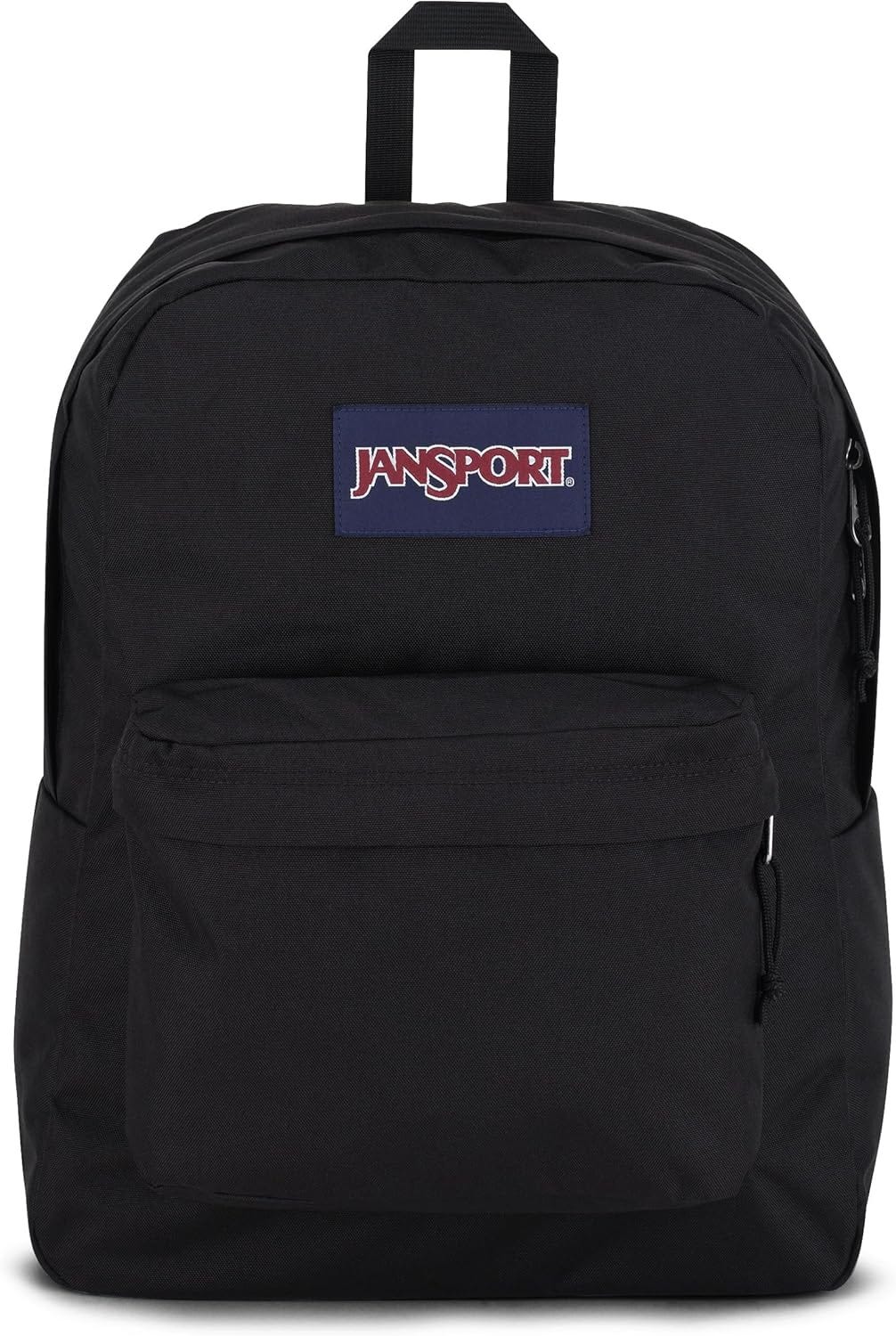
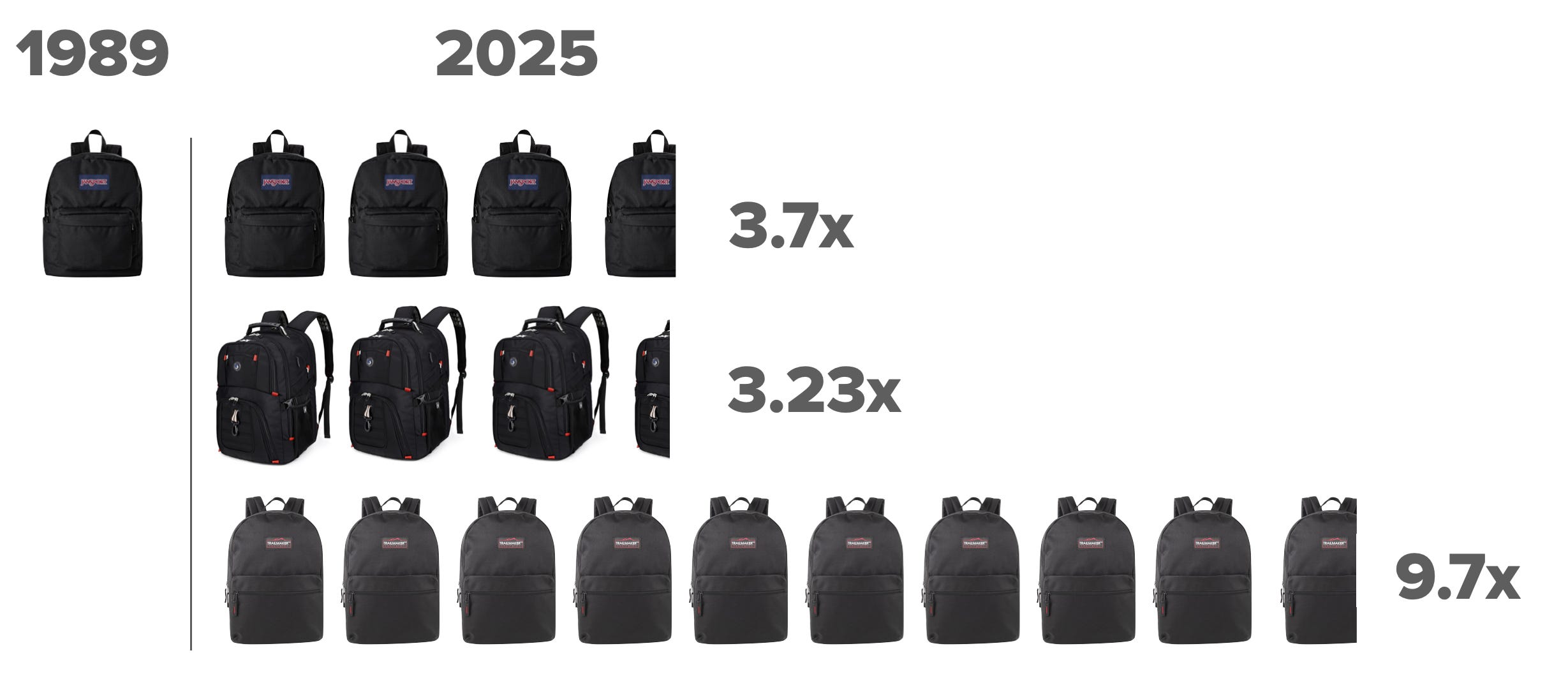
But this wasn’t always the case. Backpacks used to be expensive and rare. In 1989 you could buy a JanSport backpack from Sears for $29.99. At the time, entry level workers were earning around $5.79 an hour, putting the time price at 5.18 hours. Today the same product is available at Walmart for $26.40. Entry-level workers are now earning $18.74, indicating a time price of 1.4 hours. The time price has dropped 73 percent. For the time it took to earn the money to buy one backpack in 1989, you can buy 3.7 today.
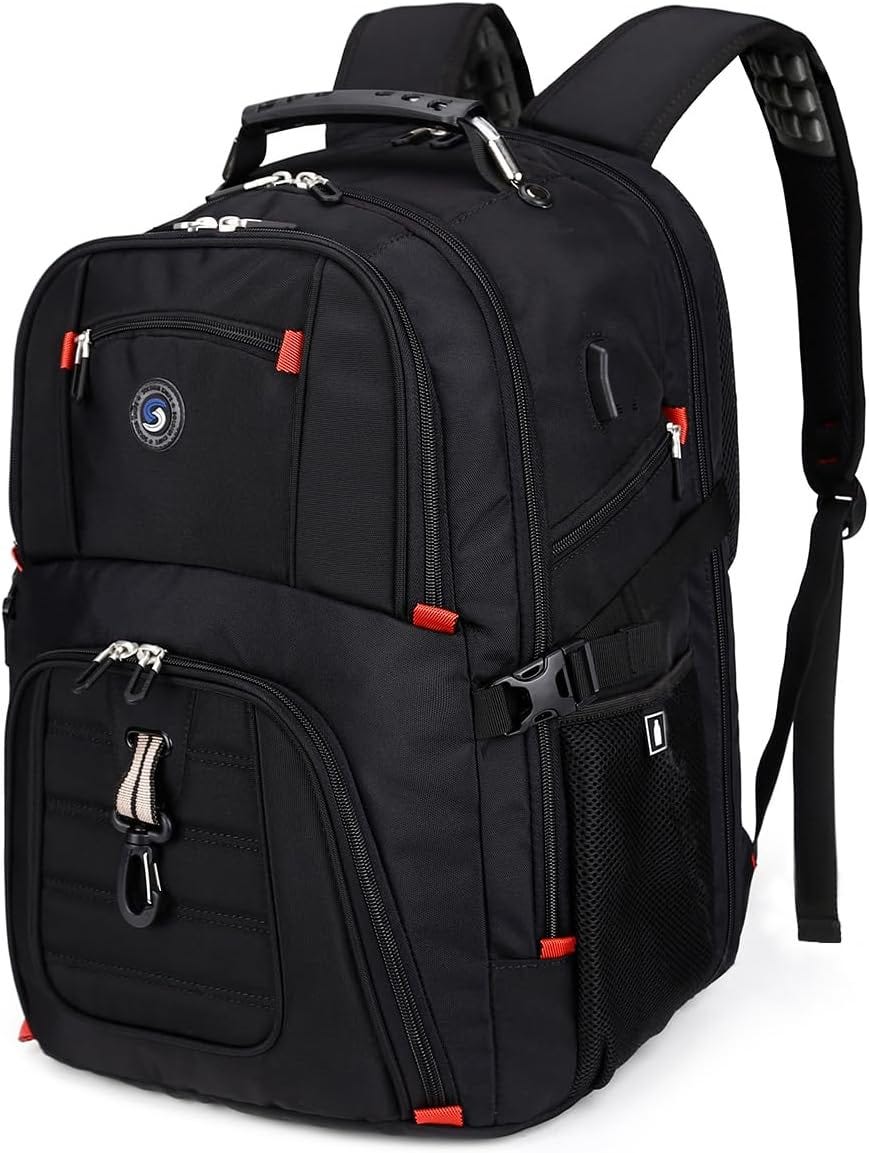
But backpacks have improved considerably during the past 36 years. Amazon now sells a backpack with 20 independent pockets for $29.99 or 1.6 hours for entry-level workers. They get 3.23 of these backpacks for the time price of one JanSport in 1989.
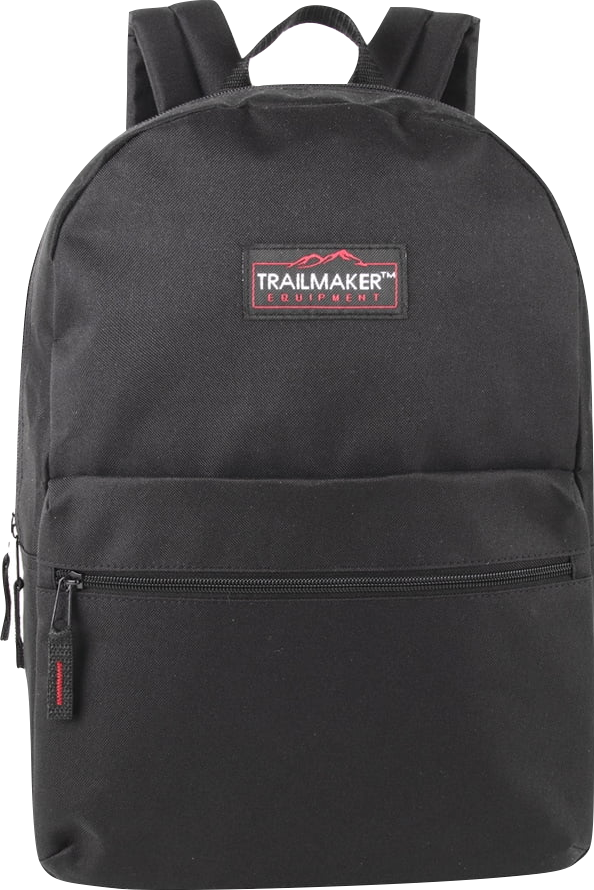
If entry-level workers want a basic backpack and aren’t concerned about sporting the JanSport logo, they can pick up a Trail Maker for $9.99 or 32 minutes. They get 9.7 backpacks for the time price of one in 1989.
From 1989 to 2025 backpacks have become 3.23 to 9.7 times more abundant for entry-level workers.
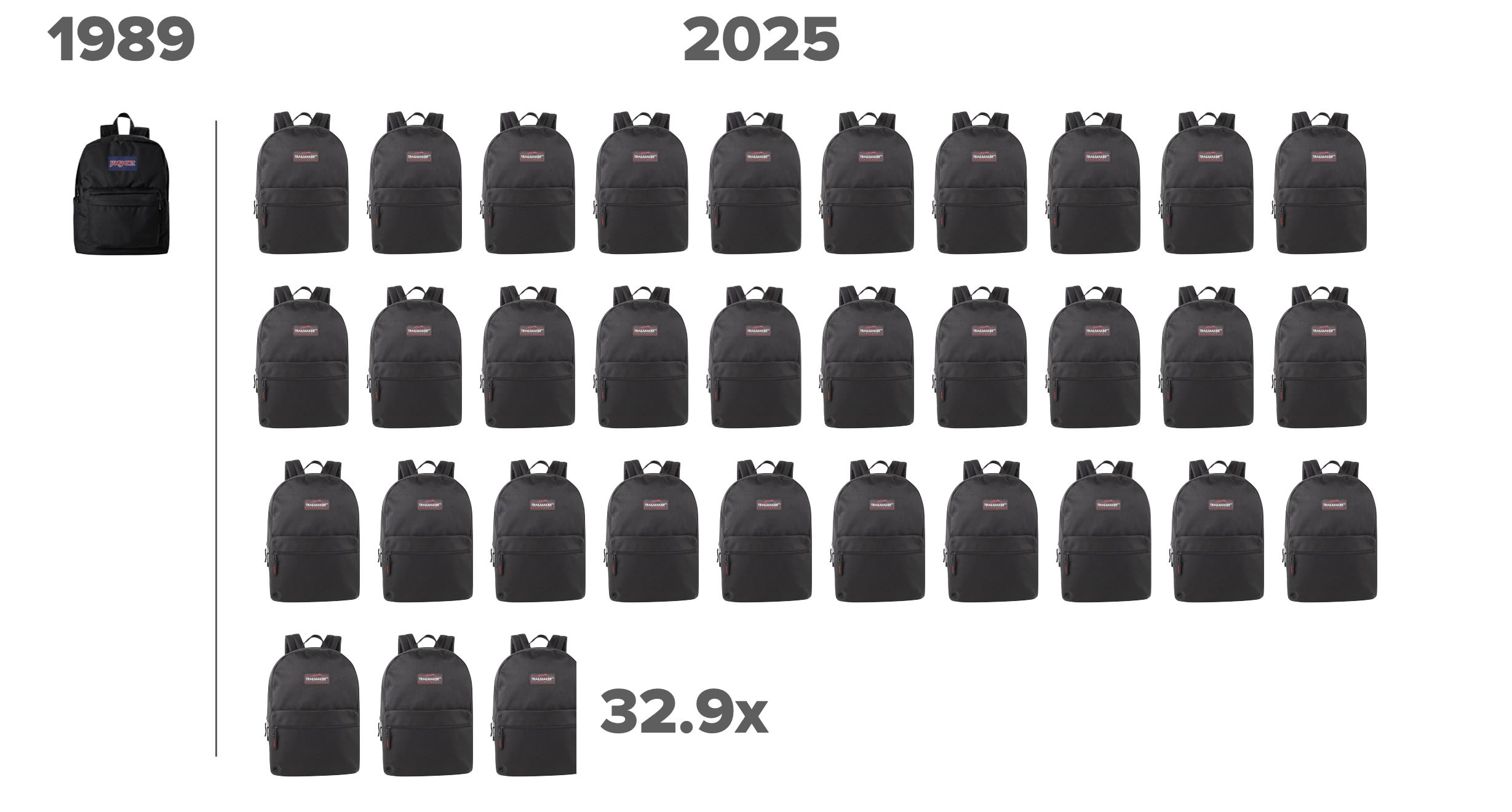
But most people don’t remain entry-level workers for 36 years. If you started your career in 1989 at a $3.35 per hour minimum-wage job, the JanSport would have cost you 8.95 hours. If you continuously upskilled and are now an average worker you’re earning $36.53 an hour, so a $9.95 Trail Maker backpack will cost you 16.3 minutes. You now get 32.9 backpacks for the time price of one in 1989. Your backpack abundance is increasing at a compound annual rate of 10.2 percent, doubling every eight years.
Caveman Backpacks
Kyle Logan at onlitravel.com notes:
You may remember Ötzi The Iceman, who was discovered frozen in the Alps. He was dated to about 3300 BC, so he’s about 5320 years old. And - you guessed it - he had a backpack!

It looks like his backpack may have been one of his prize possessions. It had a wooden frame made from a curved hazel stick that distributed the weight, an animal hide container, a rope net, and shoulder straps made of goat hide. In it, he carried the essentials for his trip: a flint knife, a copper-bladed ax, a fire-starting kit, and several pieces of dried meat. The rope netting secured his bow, and a quiver of arrows, kept outside the backpack for quick access. The whole design was innovative and functional, and allowed Ötzi to travel light.
I’ll bet that it took Ötzi much longer than the 16.3 minutes it takes today for an average worker to buy a backpack.
Designing a functional, stylish backpack is an impressive achievement. Manufacturing millions of them at consistently high quality and an affordable price is even more remarkable. That is one of capitalism’s greatest strengths: transforming inventions into innovations.
An invention is simply the proof of a new idea. An innovation, on the other hand, is an invention that succeeds in the marketplace by creating value for customers and profits for producers. The journey from invention to innovation is rarely a single breakthrough. It is a continuous process of learning through countless small improvements in materials, manufacturing, logistics, quality control, marketing, and distribution.
Manufacturing is every bit as much a knowledge discovery process as inventing. Every improvement that reduces defects, saves energy, shortens production time, or lowers costs represents new knowledge. Every employee, from the factory floor to the executive suite, has the opportunity to discover better ways of doing things. The most successful companies understand this. They cultivate a culture of experimentation and continuous improvement because they know that knowledge compounds.
Americans have long excelled at turning ideas into affordable products. Henry Ford revolutionized automobile manufacturing with the moving assembly line. Thomas Edison created not just inventions but entire systems for bringing them to millions of customers. Sam Walton transformed retailing through relentless innovations in logistics and supply chains. More recently, Chinese manufacturers have mastered many of these same principles, learning how to produce high-quality goods at extraordinary scale while driving costs ever lower.
Every affordable backpack on a store shelf embodies thousands of discoveries. Its fabrics, zippers, buckles, stitching, manufacturing techniques, shipping networks, and retail systems are all the accumulated result of decades of learning. What appears to be a simple consumer product is actually compressed knowledge.
George Gilder often reminds us that wealth is knowledge and growth is learning. The companies that create the most value are those that discover, apply, and share knowledge more rapidly than their competitors. When they succeed, consumers benefit from better products at lower time prices. The humble backpack is more than a useful accessory. It is a testament to humanity’s growing stock of knowledge and to capitalism’s remarkable ability to transform that knowledge into ever-greater abundance.
Learn more about our infinitely bountiful planet at superabundance.com. We explain and give hundreds of examples why more people with freedom means much more resource abundances for everyone in our book, Superabundance, available at Amazon.

Gale Pooley is a Senior Fellow at the Discovery Institute, an Adjunct Scholar at the Cato Institute, and a board member at Human Progress.
Thanks! Great reminder that not all costs are going up!